Sunday, December 19, 2021

A Kind of Healing


"...to live the slow quiet rhythm of a day as a kind of healing"


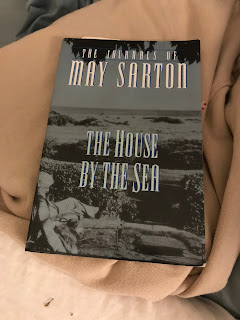
Several years ago, I discovered May Sarton’s journals. What a blessing it has been to have them keep me company through these last few years of transition as my children have moved away, and I have gone through my own deep,unguided changes, learning to grow into a not-always-welcome solitude. She and Rilke, among others, have become cherished company in my morning readings.

This is the fourth of Sarton's journals that have kept me company over the last four years. I read and loved Journal of a Solitude first, and since then I've been trying to read them in the order she wrote them. Sometimes, she annoys me, but for the most part, I find her voice a welcome and recognizable comfort in my own struggles.

If you're looking for drama and engaging happenings, these journals are not for you. If you're looking to inhabit the slow, thoughtful world of an introvert who finds more comfort in plants than in people, I highly recommend them.


Friday, December 10, 2021

Sweet Irony


"Everyone knows the profit to be reaped from the useful,
but nobody knows the benefit to be gained from the useless."


When I first began reading Drive Your Plow Over the Bones of the Dead by Olga Tokarczuk, I admit, I was not in the best frame of mind. Between the end of Daylight Savings Time and Winter Solstice, I struggle to console myself even for my own existence, so naturally, I'd choose a book with that kind of title as a pick-me-up.


For much of the first part of the book, I read with one eye on the page. It just wasn't catching me. I couldn't decide if I even liked the narrator. I found her slippery and not easily pegged. Don't we all like easily pegged? We don't have to think. I get impatient with astrologists, and she is definitely into astrology, so at first, I was dismissing her often based on my own bias. 


By page 200, I read raptly, with no breaks.


If I've learned anything in my life, it is that keeping an open mind should always be my go-to. While I still don't believe in astrology, I do believe in many of the ideas this narrator espouses. 


I love that she assigns descriptive nicknames to humans in lieu of  given names for most people. I find it interesting that she (or I guess the author) capitalizes the word Animal and the Types of Animals, but not of plants. Do I know for sure this is consistent? No, but I did often notice it. So she herself is making the kinds of distinctions she asserts we have no right to make.


I can't say much about the plot without spoilers. People die. Animals die. The point is that all killing is wrong. Is it?


Our narrator is far from perfect. She's neither always right nor always wrong. In her choices and in her actions, she embodies the imperfect hypocrisy she so rightly disdains. 


Sunday, September 19, 2021

When Reality is Too True


My Nightmare
9/15/2021

For almost two months now, I have been unable to read fiction. I've tried repeatedly. I just can't focus. This has never happened to me. Who am I if I can't read novels? 

I have no memory of the beginning of my obsession with fiction. My first specific memory of reading on my own was devouring the Nancy Drew mysteries when I was 9. Forty-five years later, I do not remember ever not being able to read fiction for weeks on end. The last novel I finished was really a novella, and that was at the end of July.

Until last week, I was just suffering in shame and silence. Then I had a conversation with two other novel eaters, and both of them told me they were experiencing the same debilitation.

What is going on?

I can't speak to anyone else's experience.  For me, the state of the world today has made it almost impossible for me to devote any mental energy to anything that isn't true. The positive side of this is that I am learning a lot about other people's experiences and improving my capacity for empathy as I learn.

Unfortunately for my novel reading life, I am also learning how much of a privilege it is for me to be able to enjoy fiction, and thus how much of a privilege it is to be able to rue the loss of that enjoyment. I have a home. I have food. I have some semblance of safety. What a privilege it is for me to worry about losing my ability to lose myself in fantasy.

And yet, maybe fantasy is what keeps us going. 

What keeps us hopeful? If we lose our ability to engage in "what ifs" and "what abouts," what have we lost?  What is the value of distraction and delusion? My current nonfiction read is about that very question. Maybe I'll blog about that next week. 


Wednesday, July 21, 2021

An Evil Pallor / Grow Your Own Tomatoes


Today, as I was hanging my clothes out to dry, I noticed an evil pallor in the sky. Amidst sustained heat I had never felt before, I realized it was past time for me to speak up about what is happening to our planet.

I grew up with grandparents who gardened and with a mother who canned and froze the fruits of those gardens. Until my mid 40s, I never had to buy commercially canned green beans, and I had never been without fresh corn or fresh tomatoes in the summer until the last of my grandparents died.

The first time I learned to can tomatoes, I was in labor with my first child. At the time, I had no idea I was in labor. My mother had died a few months earlier, and I was in a trauma fog. I felt too tired to move, but in my family, a female feeling tired has never been a good excuse to lie down, so I canned tomatoes until I couldn't. Even then I felt guilty about leaving Nanny Byrd to finish alone. Ironically, the child I was laboring over has always hated tomatoes. 

Now that I have your attention, here is what I really want to say:

Grass lawns are ecological dead zones, and that's not even taking into account the fossil fuels it takes to maintain them. Find a way to cut the area of grass you mow in half. Planting native trees and shrubs is the best solution. I am still working on this. It's not easy.

Plastics are death. Work hard to stop using them. This requires constant vigilance. If you're using a Keurig, just stop. A coffee maker with a reusable filter is not that much more difficult. I do understand the difficulty of getting away from some plastics. I've tried to endure the hell of a bamboo toothbrush on my jowls. I just can't. But at least try to be aware of plastics when you are buying things, and ask yourself, does this come in a non-plastic version? I recently changed my vinegar purchase after asking myself this question and plan to work now toward figuring out how to make my own mayonnaise. (Recipes welcome)

Compost!!!  This is so easy. Just google it. Composting and recycling cut my garbage output by more than half.

Stop using plastic grocery bags. This one wears me out because it is so easy to fix. This is the easiest of all of these problems to address. Buy a reusable bag. It's ok if you forget once in a while. I do too. What matters most is every time you don't forget.

I'm sure I'll have more to say later, but this is what came to me today while I was mowing what's left of my lawn, right after I picked the lovely tomato in the photo. If nothing else, grow your own tomatoes. It's really not difficult, and it's so lovely to be able to step outside and pick one when you want one.


Wednesday, November 13, 2019

My Most Difficult Book Post


As soon as I finished Where the Crawdads Sing by Delia Owens, I wrote about it. I have edited what I wrote several times since then. A true girl child of my culture, it is very difficult for me to speak critically in public. Only in the last few years have I realized how much this cultural silencing has cost me.  I love that there are still people who read a book and feel passionately about it. I never want to discourage anyone from reading anything. But since this is my blog, and since I well and truly suck at pretending, I'm going to tell you my experience with this novel. 

I don't remember exactly when this book first came across my radar, but when I read a description of the story, I thought, "OMG, this book is so me." After a few months waiting for it to arrive from the library, I dove in eagerly. For the first fifty pages or so, I told myself I was disappointed because I had set my expectations too high. I convinced myself I could ignore the inauthentic dialogue, relax and appreciate the beautiful passages about nature, and enjoy the development of a main character I loved. The plot, however, continued to devolve into melodrama, and the annoying dialogue got even more annoying. By the time one of the characters drove from the North Carolina coast to Asheville to get supplies, I was almost mad enough to throw the book across the room. Instead, I returned it to the library unfinished.

Over the course of the next few months, multiple people told me how much they loved this book, and I thought, well, maybe I've been unfair. So I re-ordered it and finished reading. As much as I love the character of Kya, and as much as I love the descriptions of nature and the themes of the appreciation and preservation of wilderness, I cannot love this book. In addition to the melodramatic plot, the dialogue is almost insulting. I have lived in North Carolina my entire life. Not once have I ever heard anyone use the term "Alabamee" for Alabama. If this was meant as a joke, it's not funny. And going to Asheville from the coast for any kind of supplies, what is that about?  I can't even begin to address the insertion of bad poetry into the narrative because I can't begin to understand why anyone would do that or why any editor would let it pass.

I've spent a couple of weeks trying to understand why I am so disappointed in this book. I think it's because it could have been so good. It could have been elevating. Owens could have taken Kya and her surroundings and gone the route of Kent Haruf or Anita Brookner. Instead she went full on Michael Crichton. Good intentions and a great ability to describe the natural world do not make up for the missteps in a book I really wanted to love. 


Wednesday, November 6, 2019

Tompkins Knob North on the MST


Cascades Overlook MP 271.9 on Blue Ridge Parkway

“But life holds mystery for us yet. In a hundred places we can still sense the source: a play of pure powers that—when you feel it—brings you to your knees. There are yet words that come near to the unsayable, and from crumbling stones, a new music to make a sacred dwelling in a place we cannot own.” ~Rilke

I think the hike we took yesterday is going to end up being my favorite relatively nearby hike, which I define as being an hour drive or less. This hike in in Jeffress Park, which is only about 2 miles north of the Parkway entrance at Deep Gap just east of Boone. We parked at Tompkins Knob Parking Area at MP 272.5 and entered the Tompkins Knob / MST Trail going north toward the Jesse Brown Cabin and Cool Springs Baptist Church. It’s an easy 500 feet of trail from the Tompkins Knob Parking Area to the cabin. There’s a lovely little spring and spring house down behind the cabin on its southeast side.

After passing through the clearing by the cabin and the church, the trail continues on for another easy half mile through a lovely wood to the Cascades Overlook at MP 271.9. This overlook is one of the most beautiful views I’ve seen on the Blue Ridge Parkway (see above).

From here we entered the Cascades Trail, which is a short loop down to the Cascades Waterfall. This trail is usually fairly busy. Unfortunately, half of it has been closed for about a year now, so until they open the east side of the loop again, it’s an out and back instead of a loop. The half that is open meanders beside a beautiful mountain stream on the way to the falls. The Cascades Loop Trail is a mile total, so I assume the half that's open is about a half-mile.

At the far end of the Cascades Trail, the Mountains to Sea Trail (MST) splits off and continues north into the woods. We got a little off track here because the "blaze tree" is down and looks to have been down for a while. MST forks very soon after you exit the Cascades Trail, like maybe twenty feet? If you come to a clearing with a maintenance shed near the BRP, turn around, you missed the fork. After some rambling around up and down the Parkway itself (which the dogs did not enjoy), we went back and found the MST fork and walked another half-mile or so north. This is a beautiful section of the trail with some lovely views through the bare trees down off the mountain to the east.

I don't know our total mileage, but I would guess 3 to 4 miles, considering our rambling around lost for a while. We were on the trail from 11:30 to 1:30, taking plenty of time to take photos, visit the waterfall, and let the dogs play in the creek. One of the best things about this hike is that you can tailor it to your hiking ability. You could park at either Tompkins Knob or at Cascades Overlook for less than a mile of hiking, or you can continue on the MST as far as your feet will take you. This hike would be a good start for anyone who is intimidated by hiking, as there is a lot of payoff for not a lot of work.  The elevation change on this part of the MST is hardly noticeable. We had a lovely day in the woods and were able to finish our current co-read, The Castle of Otranto in the car on the way up.  I'll try to get a book post in again soon!

Wednesday, October 30, 2019

Love Is The Only Answer I Know


Yesterday, I learned of the death of a person who was much too young to die, a child who was part of my life for two decades as I mothered a son who was part of his life. In the process of mothering our own children, we all mothered this son.

Some deaths are inexcusable, unforgettable, untenable. When I was 21, one of my younger brothers died. When that happened, I thought, OK, that's it for me. No more trauma. Then I continued to be alive, and I discovered that life is trauma. To be alive is to be traumatized, repeatedly.


When my son was born, I wanted him to have the childhood Yeats described when he wrote, "when I was a boy with never a crack in my heart." I expect this is what we all want for our children. If you're lucky, this works for a while. Then life happens, something like yesterday happens, and we're all left trying to figure everything out all over again.


To my baby boy, I don't know how to help you with what just happened. I hardly even know how to process it myself. I wish I had answers. I wish I could lead you back to an uncracked heart. But the truth is that you and I were both just lucky to live this long without your heart cracking like this.


Is there anything any of us can do to find meaning in this? I don't know. I think everyone's answer to the question of meaning is different. What have I done? I've tried to be there for my kids. I've tried to reach out to people. All we know for sure is that we have each other in the here and now. All any of us can do is love each other while we are still in the here and now. Love is the only answer I know. 

Tuesday, October 8, 2019

Who Am I, Now That I'm Not Mothering?


Every day, I wake up and think, "I am going to be a better person today!" Then life happens, and I go to bed wondering, "What exactly happened here?"  Very rarely do I end the day feeling like I have met my goal of personal betterment. Recently, I've tried to enact a week-long deductible on all emotional reactions. If I ever feel compelled to confront anyone for any reason, I invoke my week deductible. Partly, this is a personal cooling-off period, because I do tend to run hot and cold. But more importantly, it is because I've found that truth is usually revealed very slowly. 


Let's take my own life experience as an example. When my son was born, my goals for him were that he 1. not die; 2. not end up in jail; 3. not impregnate someone before he was ready to be a father; 4. not end up a drug addict; and 5. not end up sleeping on my couch.  I realize these feel like "givens" to a lot of folks, but at that point in my life I felt like Chicken Little. I fully expected him to die before he reached the age of five. 


I wasn't prepared for what would happen if he met all those goals, because I wasn't able to think that far ahead. He was my first child. When he was born, my mother had been dead for only about five months, and my younger brother had been killed a little over four years earlier. Somehow, I thought I was supposed to be able to find a way just to be okay with all of this. After all, I'd always been the strong one. What a crock of shit. When your life explodes, you can't walk away and pretend like the fire didn't touch you. I've been treading water his whole life and had no idea I was stuck in a rip tide. 


When the distractions leave, the scars will show. Only now, his life-time later, do I see how damaging it was for me, in my early twenties, to have been led to believe I was supposed to be able to handle all that trauma on my own. I never stopped to think about who I would be when I wasn't mothering. It's funny that my goal for my kids was for them to move out and move on, never giving a thought to how that would involve their moving out and moving on from me. I didn't realize how rarely they would be in my life once this goal was met.


Every day now, I try to recreate myself into someone my children can be proud of, into a person they won't dread calling. It's not an easy task when your only real vocation has been to be their mom. When I start to berate myself because I feel so damn useless sometimes, I remind myself that there are two good people in a world that happens to need good people who are there because I've been able to stumble through the last twenty-five years more or less undiminished, and I forgive myself.


Monday, September 23, 2019

Surprise! But Why?


"Write About a Time Someone Surprised You"

Today's writing prompt was hard for me, because most of the surprises I've had in my life have been bad ones, and I don't think that's the kind of surprise this prompt is referring to. My people have not spent a lot of time trying to surprise me, because they know I do not fancy surprises, and I expect they fear my wrath. I can be very scary when provoked. 

My best friend Regina did surprise me once. It was soon after she and I had been to Paris together. She offered to invite some other friends to her house and to make raclette for me for my birthday. We had experienced raclette for the first time on that Paris trip, and we both fell immediately in love. Raclette is basically a polite way to swill melted cheese like cheap beer. And there are potatoes! What's not to love? She even bought a raclette set when she got home. The main reason this surprised me is that Regina doesn't care for cooking, and she cares even less for throwing parties. I wish I had known then what I know now, which is pretty much the same as saying I wish I had been a different person for most of my adult life. (If you're under 40 and reading this, welcome to the party.)

We never had my raclette birthday dinner because I couldn't find time to work it in around my boyfriend's schedule, a boyfriend, mind you, who never changed his schedule to work around me. Even at the time, I knew this was messed up. Still, I did it. I prioritized a person I haven't spoken to in about seven years and who I'd only known for about 18 months, over a woman who's been my best friend for over 20 years now. How many good things have I missed in my life molding myself to fit around men who, stuck in their perpetual adolescence, never work anything around me and aren't even aware molding has been done?

Why do we do this to ourselves?

If you've ever seen me wear high heels, make-up, or uncomfortable clothes, you can be sure I've been trying to please some damn man who was probably in cargo shorts, tennis shoes, and a tee shirt the whole time and who has never given even a passing thought to the state of his hair or to his particular personal odor. So when you see me now at the Food Lion in baggy pants, tennis shoes, and a tee shirt with dirty hair and smelling like I haven't bathed, realize this is what growth looks like. I draw the line at cargo shorts. At least for now.

Sunday, October 28, 2018

What's in a Gendered Pronoun? A lot, Actually


I've been thinking a lot about gender lately. Over the last few years I've been trying to read books by women. I'm aware this is sexist. I'm also aware that for centuries, women's work was either ignored, destroyed, or passed off as men's. So all you guys who want to cry sexist at the current idea of someone excluding you, be off with you. Men who are secure enough to understand why women and other minorities might want to focus on our own histories, welcome and thank you for existing.

A few weeks ago, I wanted to take a bit of a break from reading anything that might distress me and read something a bit lighter, like say, a murder mystery.  I saw a copy of an Ellis Peters mystery languishing on my shelf, so I picked up One Corpse Too Many (I mean that sounds light, right?) expecting to be diverted for a few days. I didn't expect to be enthralled by the story and by the prose. I also had no idea Ellis Peters was in fact, Edith Pargeter.

Then in my quest to find a book club, I found that my new-ish local bookstore in Winston-Salem (Bookmarks) has a book club, and for October, they are reading Himself by Jess Kidd. I had never heard of either the book or the author. I almost didn't read this book, because of the title. Halfway through and loving it, I googled the author and realized she was a she, not a he, as I had assumed. To make this assumption even worse, her picture is inside the back cover of the book I am reading. (I avoid the interior of the back of books. Many plots have been spoiled by even the merest glance there.)

Just this week, when recommending the Brother Cadfael series by Edith Pargeter to a friend, I remembered the Marcus Didius Falco series by Lindsey Davis and recommended it too. I had also assumed this series was written by a man. My soon-to-be daughter-in-law is named Lindsey, and I still assumed these books were written by a man.  Wtf?

It seems that I, even after half a century existing as a woman who tries to be inclusive and open-minded, still automatically assume a book is by a man if the author's name is gender-neutral or male, even though I am well aware that women often assumed male names to get their books published and accepted.

So, where does this leave us? Well, it leaves me with a reinforced sense of purpose when it comes to reading works by minority voices and with the thought that if your response to this is to tell me to stop being so sexist, you might not like the answer you get. It will be gender-neutral, but it won't be rated G. Read on, friends, and be sure to include minority voices in your journey.

Tuesday, October 16, 2018

Church Picnics at Doughton Park: The Persistence of Memory


 When I was young, my church went to Doughton Park for a picnic every October. I had no idea where we were once we got there. I never drove, so in my memory, it has always been this nebulous, unreachable place. I wasn't even aware it was on the Blue Ridge Parkway. I think I’ve been afraid to look for it. Maybe I felt like I no longer deserved to find it. I’ve spent decades puzzling over where this place might be when it was so close, if I had just been brave enough to look.

Today I found the spot of those church picnics:  all those hours of food, communion, peace, love, and acceptance. Was that not real? How did we lose all of that? Was it a ruse based on the facade of conformity the whole time?  Looking over the empty tables, haunted for me by so many ghosts, I had to make myself stop searching for and grieving all those people who once meant so much to me and who are now lost to me.

So I parked there and walked through the fields I used to run through as only a child can, over cow patties (that at least hasn't changed), to the rocks that awed me both then and now, and as I walked, I thought, if I wanted to reconvene these people who once meant so much to me, how would I do that? And I knew that the only answer was that I would have to die, and then some of those left living might come to my funeral, if they didn’t have some other more pressing engagement that day.

And I realized again what I’ve known now for a long time: We don’t do living right.

Sunday, July 29, 2018

Why Read?

 
"I was gradually getting used to feeling the range of available human emotions, their intensity, the rapidity with which they could change. Until now, anytime that emotions, feelings, had threatened to unsettle me, I'd drink them down fast, drown them. That had allowed me to exist, but I was starting to understand that I needed, wanted something more than that now."
 ~Eleanor Oliphant

For those who don’t see the point in reading fiction, here is an example of what fiction can do for you. In the book Eleanor Oliphant Is Completely Fine by Gail Honeyman, toward the end of the book, which is the beginning of Eleanor Oliphant’s healing, Eleanor finally realizes that the negative, hateful, judgemental voice in her head that she always took for her own voice is actually the voice of her mother. Quirky, bizarre, broken, naive, and vulnerable as Eleanor Oliphant’s true voice is, she reminds me of who I might become if only I were brave enough.  Her complete honesty and lack of facade are what I would like to strive for in my life.

As I mentioned a few months ago, I’ve been going back to therapy this summer, and one of the things I’ve been trying to learn is to see, recognize, and know myself. I realize this sounds elementary and like something that should have been handled decades ago, but if you grew up a woman, especially, I think, in a rural society, you will probably understand why self-knowledge and self-determination has escaped me. Like many other women I know, I have spent too much of my life worrying so much about pleasing and displeasing others that I never truly learned what I needed to make myself happy. As my therapist has pointed out on numerous occasions, this is both an impossible and an exhausting way to live.
 
As children most of us were taught to subject our wills and opinions to those of our parents, and sometimes we internalized the voices of our parents so much that we never developed our own voices. I’ve always been overly-sensitive to the moods of others and as a child and teenager wanted more than anything to please my parents. I learned the lesson of worrying about other people’s moods and needs so much that it became who I was without my even realizing it was happening. Even now, I am still working to understand and believe that I don’t have to be this way, that learning to recognize my own voice is not selfish. Most importantly, I am learning that the voice in my head sometimes isn’t my voice at all, and that my job now is to find my own voice and use it. Thanks to Eleanor Oliphant for helping me verbalize this realization. Read a novel once in a while. You’ll be amazed what you can learn about human nature and about yourself.

Friday, June 29, 2018

Less Sure About Less


"And at fifty, Less muses drowsily, you're as likeable as you're going to get."

I experienced a strange transition reading this novel. I didn't think I was going to like it for a while. I wasn't even sure I would finish it. It just wasn't catching my attention. I don't know why. But then, about the time Less gets to Morocco, which is toward the end of the book, I loved it. 

A lot of the book was too much hapless Less mess for me, and I got tired of it. Maybe that was my problem with it. Maybe it was just because Zohra was the only character I could personally identify with, and she doesn't show up until Morocco. Maybe it was just due to my mood.  Who knows? 

In the end, though, I enjoyed the book and am glad I read it. It was definitely laugh out loud funny in many places.

Friday, June 8, 2018

How to Save a Life, One Day at a Time

photo by Amy Brandon
 
"Little things heal our hurts. Sounds, scents, the spoken word, and music that may mean nothing to someone else can reach into our souls and do a work that ordinary methods cannot touch."
 ~Joyce Sequichie Hifler

In the wake of this week sad news on the mental health front, I feel like I need to say this. I'm probably going to spend tonight spinning in my head about whether I should have shared this or not, but I'm going to be brave and say it anyway. I have struggled with depression for years. I've fought my own battles. So far, I've won those battles, but not without a considerable amount of self-harm, both physical and emotional. I've been lucky. Somehow, I've been able to continue to see the love surrounding me. If you are one of those people whose go-to reaction about suicide is to jump in and pass judgement, just stop. Each of us, especially those of us who live with mental illness, fight battles every day no one else can see, and just because you can't see something doesn't mean it isn't real. Unfortunately, mental illness is much more common than most people realize because the old-school stigmas still persist, and we just don't feel comfortable opening up about our struggles. People who are depressed aren't making a choice; they aren't being selfish; they aren't weak. Being awake to the darkness and staying alive through any days with that knowledge requires strength beyond what most of us understand.

In December, 2016 I spent a week at Forsyth Hospital on the psychiatric floor. This was quite probably the most important week of my adult life. It was the first time I had been taught that what was happening to me was not my fault, told that I didn't have control over it, that I didn't cause it, and that I couldn't fix it myself. It was the first time I learned to take care of myself. I'm not going to be glib and say it's all been uphill from there. My life since then has, in large part, consisted of my learning to set boundaries to facilitate my own mental health. Until I started therapy in 2014, I had never even heard of the concept of setting boundaries to protect my own mental health. (Probably this goes a long way toward explaining a lot of my adult life.) I know that many memes are shared on social media about getting away from things or people who make your life harder, and I know that a lot of us, including myself until recently, click "like" and "share" without giving those truisms another thought, but what I am beginning to discover is that in order to achieve real health, we do have to remove ourselves from situations and people who cause us harm. More importantly, we also have to learn to stop causing ourselves harm. The difficult loop here is to realize that you are causing yourself harm if you stay in a situation that harms you in any way. We are good at recognizing physical harm. Emotional and mental harm is much more difficult to see. When you learn to respect yourself, when you finally figure out that achieving self-worth has to be your most important job, it becomes so much easier to remove yourself from situations and people who damage you. I am speaking here only of my own experience. I don't pretend to have any idea what other people go through.

None of this is easy. I have to work hard every day to be well. Some days, I am well.  Some days, I am just ok, and some days, I'm a fucking train wreck. Wellness requires commitment and daily work. But how is committing yourself to daily mental health any different from going to the gym or getting an antibiotic for an infection? After telling myself I couldn't afford it, I went back to therapy a few months ago, and I am so much better now than I was even a month ago. Before you assume anything about me and my financial situation, I pay full price for those thearpy sessions because I have shitty health insurance, and I've had to give up some things to do that, but it is absolutely worth it. Sometimes getting help truly becomes a question of what your life is worth. Here are some of the free things that have helped me:  yoga at home (YouTube), meditation at home (free apps), reading (library books), Krista Tippett's On Being Podcast, The Hilarious World of Depression Podcast, my dogs and cats, writing in my journal, gardening, bird-watching, cooking, cleaning my house, and reaching out to talk with people who make me feel better. Spend some time making your own list of things that make you feel better, and then do at least some of them every day. If you think you don't have time, consider how much time you spend watching TV or on social media.  Think of this list as your mental health tool box and use those tools daily. A few days of self-care can make all the difference in the world. You don't need permission or an excuse. Your life is all the reason you need.


Sunday, May 6, 2018

The Power of The Power

Photo by Amy Brandon


For a book I almost didn’t finish and certainly didn’t love, The Power by Naomi Alderman has dominated an awful lot of my thinking lately. So many questions, so many interpretations.

Most of the reactions of the women I know who’ve read this book seem to be centered around the female on male violence. That violence is what almost made me stop reading. I find myself abandoning books very often that include male on female violence because I’m tired of dehumanizing misogyny, and because I find any kind of violence disturbing. Perhaps an uncomfortable question to ask myself is why I was able to read past the dehumanizing female on male violence. I didn’t like it, and I felt like some of it went way too far, but I do understand the point the author was making with it.

The most common response I’ve heard from other readers, all of whom are female, interestingly enough, has been that they were disappointed with the way the women in the book used the power they were given. They all believe, as I do, that women would behave better. One person said that because women know what it is to be oppressed, she believes women would not jump straight to being oppressors. Another woman mentioned that women tend to be more nurturing and loving than men so it should follow that women would be kinder leaders. From the narrow view of my own experience, I agree with both of these assessments, but I don’t know many women who have survived the kinds of experiences that Allie, Roxy, and Tatiana (three of the women in The Power) survived. I don’t know what my reaction to men would be if I had lived their lives. I do understand their bent to revenge more than the character, Margot’s, who seems to be a power-at-all-cost politician. I have no personal knowledge of or experience with a woman like this, although I assume they exist.

Another common comment other readers made was that they liked the book for the first hundred pages or so but not after that. It was shortly after those first 100 pages that I remember thinking I might not be able to finish the book. I detest violence. I can’t even watch old cartoons, never could. I don’t care about power. I don’t understand the desire to be in control of another person. I don’t understand the concept of revenge at all. I do understand that I speak out of the privilege of my own safety.

Violence, revenge, control, and well, power, is what this book is about. Now, granted the book is hyperbolic and satirical, but those two traits don’t necessarily make the violence any easier to read. The plot moves along very well, and I’m sure for people inured to CSI and Law and Order and all those other TV shows the majority of us consume, the violence will not be an issue.  Or anyway, it shouldn’t be. If you can consume male on female violence on a regular basis, then one book with a reversal should not be an issue for you. If you’re like me, and you generally eschew anything with violence, consider yourself forewarned. If you’re looking for love, peace, hope, or redemption, look elsewhere. Still, I think the warning this book provides makes it worth reading.

Monday, April 30, 2018

Motherhood: It's An Asskicker Every Time

These are the People I Love Best
 

Today, I realized what I've been mourning the last eight years is my motherhood. I understand that I am still a mother, but for me, the best parts of motherhood are over. I look at these younger mothers running around to little league and soccer and music, and I hate them. I hate them because I want to be them. We hate most what we don't understand, but in a crazy, only-human-way, we also hate what we want to be but can't. I know these women in a way they don't even know themselves. I know sometimes they hate what they are doing. I know some days they live for 30 minutes alone at night. I also know they have no idea what they have right now.

Often at my age, women take up "nannying" someone else's kids. While I now understand this inclination, it won't work for me. It's not kids I want. I don't even like kids. What I want is my kids back. I want my kids when their breath at night woke me up, when I was the reason their faces lit up when I walked into a room (is there anything else on earth like that?), when they would wake up and ask me what's for breakfast, and I would say, fix your own breakfast and pack your lunch while you're at it, yet still I felt safe in this world because I knew that no matter how much of a clusterfuck I was, motherhood was something I could do right every day, and I knew that here were two people who, no matter what I ever did, worshipped the ground I walked on. I know how they feel, because every day of their lives, I've felt the same way about them, even when I was mad enough to throw things (Sorry, B. I may have over-reacted. When you have your own kids, you can tell me. I love you). When I look at my kids these days, I feel content just to dial it in from here on out. Even if I never do one other good thing, I've done what I was sent here for.  I hope you've had that in your life. It's the best I can wish for us all.

Me in the Sweet Spot and Not Even Knowing It

Friday, April 27, 2018

We Are All Migrants

 
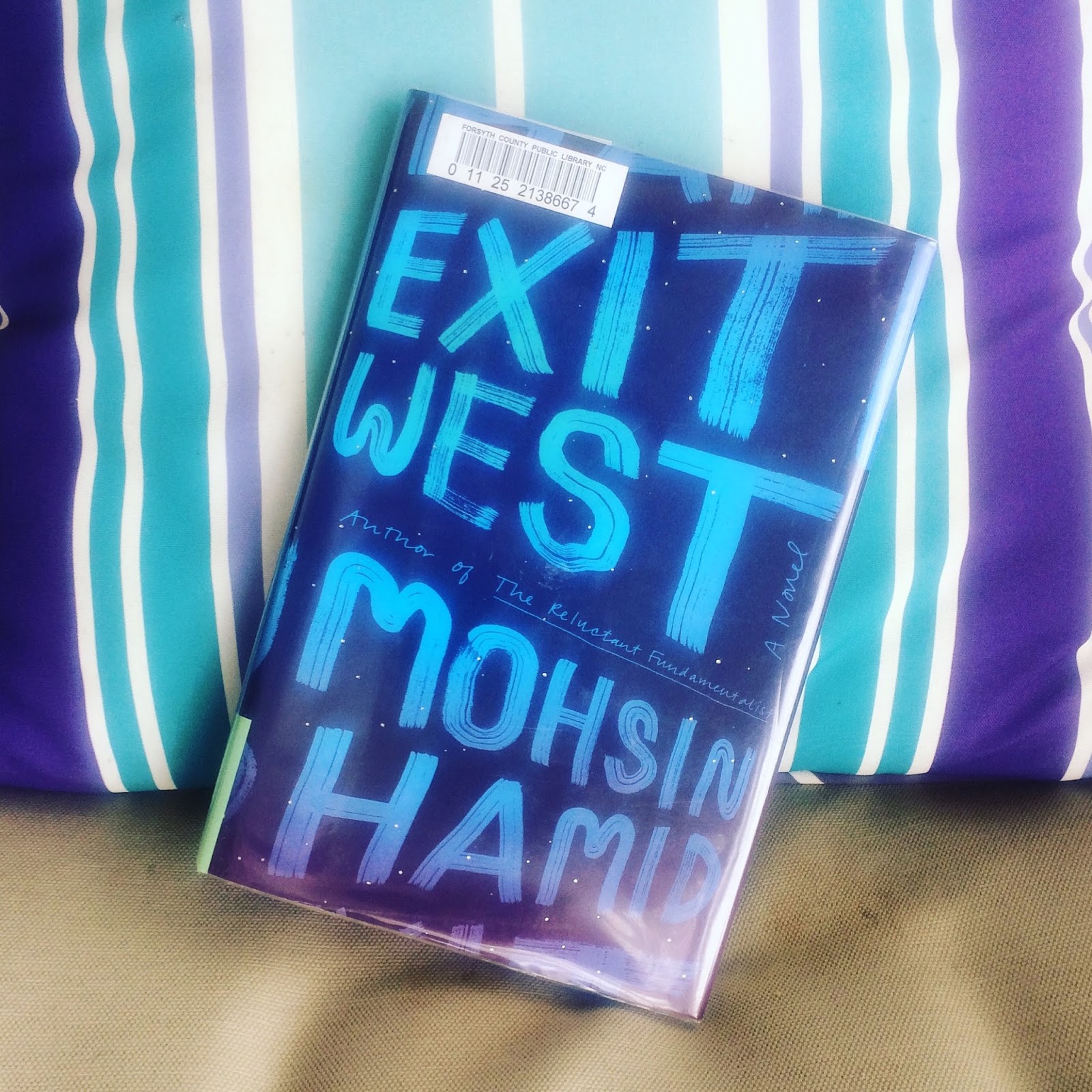
"The news in those days was full of war and migrants and nativists, and it was full of fracturing too, of regions pulling away from nations, and cities pulling away from hinterlands, and it seemed that as everyone was coming together everyone was also moving apart." from Exit West by Mohsin Hamid
 
Last year when I read the review of Mohsin Hamid’s Exit West in the New York Times Book Review, I decided against reading it for two reasons:  I couldn’t imagine how a story about the refugee crisis in our world wouldn’t be depressing; and I found the idea of the magic exit doors to be a little off-putting. Sometimes I enjoy magical realism, but I was skeptical about combining it with the serious, sobering issue of the refugee crisis. When the book showed back up recently in The Morning News Tournament of Books, I decided to give it a try, and I am so glad that I did.
 
I can understand why this book isn’t for everyone. It is not a deep, heavy treatise on the refugee crisis, but I don’t think it’s any less serious for its lack of depth. I found it to be a quick read, but one that nonetheless made me think deeply. The use of the doors worked well to reinforce the important point of how vastly different standards of living are with just a change in geography, but also of how nearly the same people are everywhere.  People in Britain and America might have reliable access to electricity, clean water, cars, food, and safety, but they are not immune to the xenophobic herd mentality that plagues people everywhere. In fact, easy access to comfort and riches seems to make one more susceptible to isolationism. When you choose to look askance at the young men who join any kind of gang or militia, look around at how much this kind of assimilation happens everywhere (only the details are different), especially when family and society break down and leave people feeling alone and unsupported. Saeed and Nadia have fled a broken society where a militia has taken over and wreaked havoc, only to end up in London where “nativist provocateurs” threaten violence, and refugees under threat then retreat into factions of “their own kind.” Safety in numbers; comfort in sameness….this is common to us all. Whether you believe in a god or not, I think a lot of us would benefit from being more aware of the sentiment behind the phrase, “There but for the grace of god go I.”


Exit West Notes


P4 “...one moment we are pottering about our errands as usual and the next we are dying, and our eternally impending ending does not put a stop to our transient beginnings and middles until the instant when it does.”

P11 war escalates time (in this example due to the deteriorating of a bldg’s facade)

P 28 Ironic that Sadeed uses a burqa to sneak into Nadia’s apartment to date. When everything is hidden, everything is hidden…

P42: virtual world that is available to people in undeveloped nations stands in stark contrast to their own reality:  “...children who went to sleep unfed but could see on some small screen people in foreign lands preparing and consuming and even conducting food fights with feasts of such opulence that the very fact of their existence boggled the mind.”

pp46-47 description of psychodelic mushrooms on consciousness

pp87-88 I like the idea of the exit doors...desperate people searching for a way out, but the theme is embedded in a somewhat clunky, jarring manner. I liked it better when he just used the vignettes instead of explaining anything. It is an interesting concept though, that you could just step through a door anywhere and get somewhere else, especially given how difficult it is to enter and exit some countries now.  Maybe he’s making a point about the pointlessness of all the borders and patrols and “safeguards?”

P94 Nadia is more comfortable with change and progress and variations of movement in her life than Saeed, in whom “the impulse of nostalgia” was stronger, perhaps because his childhood had been more idyllic?  Same idea as people who have more fearing loss more

P96 parents have to let go of children in order to save them

P98 “...for when we migrate, we murder from our lives those we leave behind…” so many people here for instance not being able to see their parents any more…

P106 Doors west are heavily guarded; doors east are not

P109 “ ...the militants had perhaps hoped to provoke a reaction against migrants from their own part of the world...and if that had been their hope then they had succeeded”

[Violence as a vicious cycle:  Militants kill citizens and in return “nativist provocateurs” attack anyone who looks like the militants.  What’s the difference in these two violent groups? Any violence:  physical, verbal, mental, emotional, is equally wrong.  People’s motives are easier to grasp:  revenge or maybe just sadism, but regardless of motive, violence is wrong. And I know we think smugly to ourselves that we would never, but we do.  We do every time we lash out at each other, it’s just a matter of degrees. Violence starts with ideas, moves to words, and so on, and violence always breeds violence, so it can never be an answer. I don’t have the answer.  I just know it isn’t violence.]

P138: build up to conflict, waiting:  “the calm that is called the calm before the storm, but is in reality the foundation of a human life, waiting there for us between the steps of our march to our mortality, when we are compelled to pause and not act but be.”

P139:  “people are monkeys who have forgotten that they are monkeys, and so have lost respect for what they are born of, for the natural world around them…”

P140:  If Nadia broke her promise to keep Saeed safe, would that “mean she stood for nothing whatsoever.”

[The areas where the refugees have squatted become known as “Dark London” because of power cuts and also I assume due to skin color?]

Pp146-7:   Refugees under threat retreat into factions of their own kind: safety in numbers, comfort in sameness

[This story makes me grateful for everyday things like the ability to shower and wash clothes and to work and earn an income, for blankets and soap and towels…]

P158:  everyone both converging and diverging...the migration, mixing and unsettling and so, frightening...people become isolationist (see Brexti and MAGA)  
“The news in those days was full of war and migrants and nativists, and it was full of fracturing too, of regions pulling away from nations, and cities pulling away from hinterlands, and it seemed that as everyone was coming together everyone was also moving apart.”

P 159:  “The fury of those nativist advocating wholesale slaughter...so much like the fury of the militants in her own city. She wondered whether she and Saeed had done anything by moving, whether the faces and the buildings had changed but the basic reality of their predicament had not.”

...but then she grasps her freedom outside her homeland and grins “with a wildness.”

[Interesting that the Londoners are referred to as “Natives,” which usually connotes “uncivilized” peoples.]

Pp163-4:  “Saeed wondered aloud once again if the natives would really kill them, and Nadia said once again that the natives were so frightened that they could do anything.”

P164  “Our country was poor.  We didn’t feel we had as much to lose.”

P165 “...to love is to enter into the inevitability of one day not being able to protect what is most valuable to you”

P197:  point of there being no natives left in the USA begs the question...then of where am I a native?

P 209  “We are all migrants through time.”
A Kind of Healing

  "...to live the slow quiet rhythm of a day as a kind of healing" Several years ago, I discovered May Sarton’s journals. What a b...